
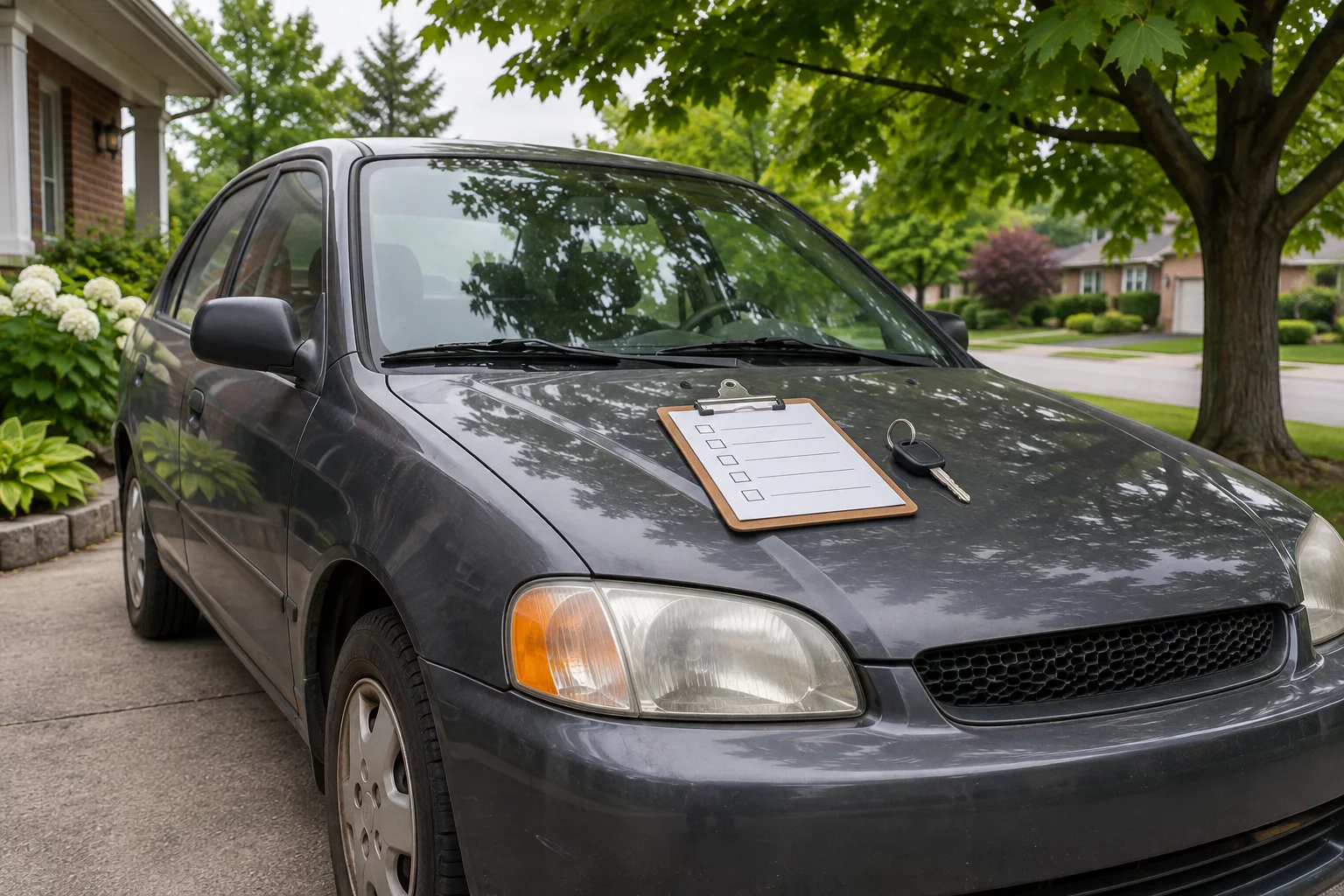
Ontario vehicle disposal checklist
An older vehicle does not automatically belong in a landfill—or even in a recycling stream. The most responsible choice depends on whether it can be safely reused, repaired, sold for parts through an appropriate operator, or treated as an end-of-life vehicle. This guide explains how Ontario owners can compare those paths without relying on vague “green” claims.
Start with the vehicle’s realistic next use
A roadworthy vehicle with manageable repair needs may have more useful life. A mechanic’s inspection can help separate a practical repair from a repair bill that exceeds the vehicle’s value. If the vehicle is unsafe, severely damaged or incomplete, an end-of-life route may be more appropriate.
Do not remove fluids, batteries or other components at home simply to prepare a vehicle for collection. End-of-life vehicle sites are subject to Ontario requirements for handling vehicles, wet components and other materials. A qualified downstream operator is better equipped to decide what can be reused and what must be managed as waste.
Four disposal routes to compare
Repair and continue using it
Repair can avoid the resource demand of replacing a vehicle, but only when the result is safe and economically sensible. Ask for a written estimate, distinguish required work from optional work and consider likely near-term maintenance.
Sell or trade a roadworthy vehicle
A private sale or dealer trade-in may suit a usable vehicle. Ontario’s seller requirements matter: the seller generally provides a Used Vehicle Information Package, a signed bill of sale and the completed transfer section of the permit. The registered owner keeps the licence plates and the plate portion of the permit. Review the current steps in Ontario’s used-vehicle sale guide before the handover.
Donate through a legitimate program
Donation may be appropriate when a recognized charity or its authorized vehicle program accepts the vehicle. Confirm who will own the vehicle, who issues any tax receipt and whether collection charges or eligibility conditions apply. A charity name in an advertisement is not, by itself, proof of authorization.
Request a whole-vehicle purchase offer
How to assess environmental claims
Ask what happens after collection and whether a qualified independent operator may handle later dismantling, parts recovery or recycling. A buyer should not imply that it owns a recycling plant or controls every downstream outcome unless that claim can be verified.
Ontario’s end-of-life vehicle site guidance describes operating requirements for registered activities, including the management of fluids and wet components. You do not need to master the regulation, but you can ask whether the receiving operator follows applicable provincial and municipal requirements.
Information to gather before requesting an offer
- Year, make, model and vehicle identification number.
- Whether the vehicle starts, rolls, steers and has all four wheels.
- Major collision, fire, flood or mechanical damage.
- Missing parts, including the catalytic converter, battery or wheels.
- Exact pickup location, parking restrictions and access for collection.
- Ownership status and any lien or financing issue.
Accurate details reduce the chance that the terms change when the vehicle is inspected. Remove personal belongings, keep your plates and do not sign over ownership until you understand the agreed purchase and collection terms.
A practical low-waste decision
The “greenest” answer is not a slogan. It is a documented decision that prioritizes safe reuse when practical, lawful transfer and appropriate downstream handling when a vehicle has reached the end of its useful life.