
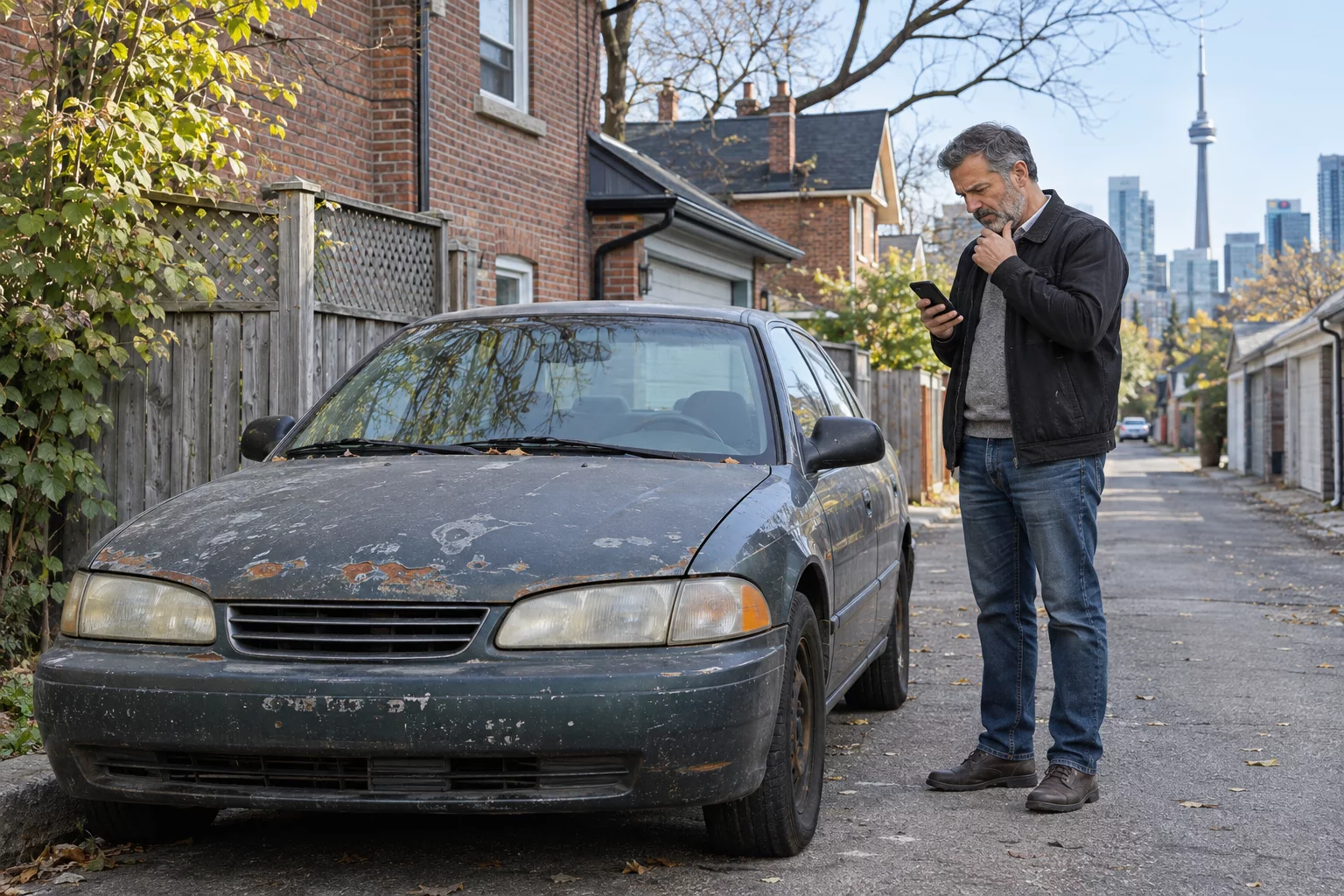
Toronto vehicle pickup guide
An unwanted car can become a parking, repair and paperwork problem, especially where Toronto driveway, condominium or street access is limited. A clear process helps you compare options, describe the vehicle accurately and avoid promises that cannot be confirmed until the buyer reviews the details.
1. Decide whether removal is the right option
Start with the vehicle’s condition and likely use. A roadworthy car may suit a private sale or trade-in. A vehicle that is non-running, extensively damaged or uneconomical to repair may be better suited to a whole-vehicle buyer. If you are unsure, compare a repair estimate with realistic sale options before committing.
2. Gather the details that shape an offer
Vehicle-specific information matters more than a generic online price. Have the year, make, model, VIN, mileage and ownership status ready. Explain whether the car starts, rolls and steers; whether all wheels are present; and whether major components are missing. Photos can clarify collision damage and pickup access.
Location also affects collection. Tell the buyer if the vehicle is in underground parking, behind another vehicle, on a narrow laneway or subject to condominium rules. Do not assume a pickup time is guaranteed until the buyer confirms availability, access and the purchase terms.
3. Verify who can authorize the sale
The seller must have authority to sell the vehicle, and paid-off, lien-free ownership requirements apply. Match the VIN on the vehicle to the permit and resolve any financing or estate issue before arranging collection. Ontario’s guide to buying or selling a used vehicle explains the usual transfer documents, bill-of-sale information and plate responsibilities.
4. Compare the full terms—not just the headline number
- Is the offer based on the exact condition you described?
- Is towing included with the accepted purchase?
- What could cause the offer or appointment to change?
- When and how is payment made?
- What ownership documents are required at pickup?
5. Prepare the vehicle and collection area
Remove personal items, toll devices, parking passes and documents that do not belong with the vehicle. Keep the licence plates; in Ontario, plates stay with the driver rather than the vehicle. Locate every key you plan to provide and make a note of the odometer reading if it is available.
Make the vehicle accessible without creating a safety risk. If it is in a paid lot, condominium garage or private facility, confirm permission and height or access restrictions. Do not attempt hazardous repairs or fluid removal to make the vehicle easier to collect.
6. Complete the handover carefully
At collection, confirm the vehicle and agreed terms before signing. Retain a copy of the bill of sale or transaction record. Hand over the vehicle portion of the permit as required for the transaction, but keep your plates and the plate portion. Cash payment should occur at the accepted pickup—not on the strength of an unverified promise made earlier.
What happens after pickup?
Depending on condition, later parts recovery, dismantling or recycling may be handled by independent downstream operators. Junk Car Bin should not be understood as a public scrapyard, parts retailer or owner of a processing facility. Ontario regulates prescribed end-of-life vehicle activities; the province’s ELV site guidance explains those requirements.
A smoother Toronto pickup starts with accurate facts
The fastest route is usually the most transparent one: disclose the vehicle’s condition, confirm ownership and access, review the complete offer and wait for a confirmed appointment before making plans around a pickup.