Milton vehicle recycling process
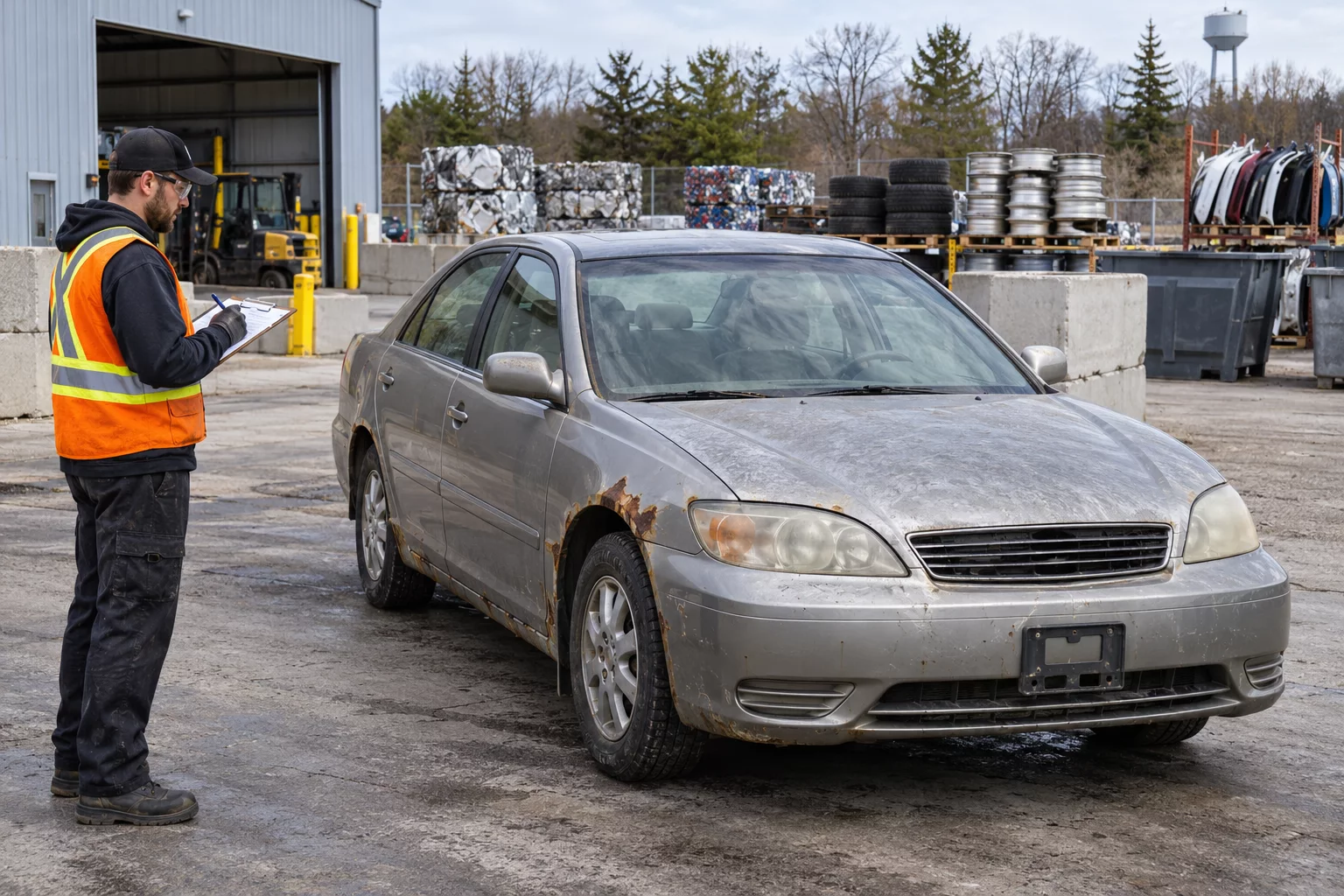
“Car scrap yard,” “auto wrecker” and “vehicle recycler” are often used interchangeably, but they can describe different roles. A service-area buyer may purchase and collect a whole vehicle, while an independent end-of-life vehicle site may later remove fluids, assess reusable parts and prepare materials for recovery. Milton owners should verify which business is responsible at each stage.
What makes a vehicle end-of-life?
A vehicle may reach end-of-life status when collision damage, corrosion or major mechanical failure makes safe repair impractical. Age alone does not decide the outcome. A roadworthy vehicle may still have useful life, while a newer vehicle with severe structural or fire damage may not.
Before choosing a route, gather a mechanic’s repair estimate when appropriate and compare it with realistic sale options. Do not rely on an unsupported “top price” claim; value depends on the specific vehicle, its completeness and the transaction conditions.
How the recycling chain can be divided
Whole-vehicle buyer
A buyer reviews the vehicle details, confirms ownership requirements and may arrange collection after an offer is accepted. Junk Car Bin buys eligible whole vehicles. It does not operate as a public parts retailer, standalone towing company or claimed owner of a Milton dismantling facility.
Collection provider
The equipment and access requirements depend on the vehicle and location. Towing is included when Junk Car Bin agrees to purchase the vehicle and arrange collection. It is not an unconditional service for every submitted vehicle.
Independent downstream operator
A qualified operator may remove fluids and hazardous components, assess parts for reuse and separate metals or other materials. Ontario regulates prescribed end-of-life vehicle waste disposal activities. The province’s ELV site user guide outlines requirements involving depollution, storage, equipment and records.
Questions to ask before accepting an offer
- Is the offer based on the year, model and condition I described?
- How do missing wheels, battery or catalytic converter affect eligibility?
- What proof of ownership and identification is required?
- Is towing part of the accepted purchase?
- Does the pickup location have enough clearance and safe access?
- May an independent operator handle later recovery or recycling?
Cash is paid at an accepted Junk Car Bin collection under the agreed terms. Pickup timing depends on availability, ownership, location and access. A form submission is a request for review, not a guaranteed price or appointment.
Prepare the Milton vehicle for collection
Remove belongings, parking permits, toll devices and plates. Locate the keys and permit, confirm the VIN and resolve any lien or estate issue. Ontario’s used-vehicle sale instructions describe the usual seller documents and transfer responsibilities.
Disclose underground garages, narrow lanes, missing wheels, locked steering, soft ground or a vehicle blocked by other property. Do not attempt to drain fluids or remove hazardous components at home. Accurate information supports safer equipment selection and more reliable terms.
How to evaluate environmental claims
Ask for a clear description of the downstream route rather than accepting a generic “100% recycled” statement. Material recovery varies with the vehicle, available markets and the receiving operator. A responsible explanation distinguishes the buyer from the processing site and avoids claiming control over outcomes it cannot verify.
A transparent route for an end-of-life vehicle
The practical goal is a documented sale, confirmed collection and appropriate downstream handling—not a vague label. Verify the roles, conditions and paperwork before choosing a Milton vehicle buyer.