Used-part buying guide
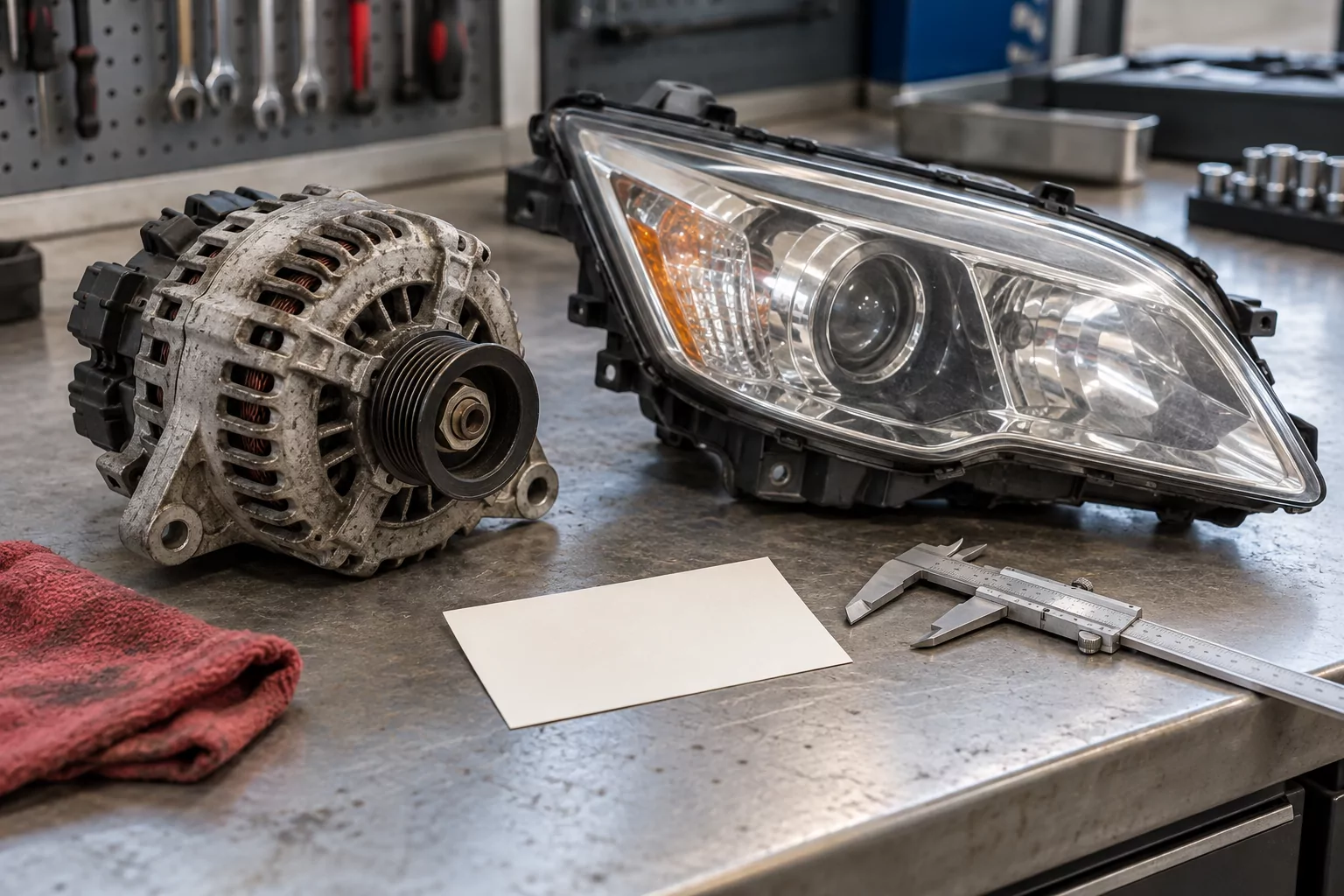
Buying a used auto part in Mississauga starts with fit, not price. Confirm the donor part number or interchange, your vehicle’s VIN and trim, the component’s tested or as-removed condition, what is included, and the seller’s written return terms. Junk Car Bin buys eligible whole vehicles for pickup; it does not sell used parts or operate a public parts counter.
Quick answer
- Use the VIN and exact part number when possible; model name alone may not prove fit.
- Ask the parts seller how the component was assessed and what arrives with it.
- Compare the complete installed cost and written return terms with a new or remanufactured option.
What does an auto wrecker actually sell?
Some auto wreckers dismantle vehicles and inventory reusable components. Others focus on acquiring vehicles or sending them to another processor. The label “auto wrecker” does not establish that a business has a public yard, a parts counter or the component you need. Contact the seller and confirm its current inventory and collection or shipping arrangements before travelling.
A used component might be removed from a vehicle with collision damage, mechanical failure or another reason for retirement. Its source does not by itself prove the part’s condition. Ask what the seller knows about the donor vehicle and what checks were actually performed.
How do you check compatibility?
Identify your vehicle
Have the VIN, year, make, model, trim, engine and drivetrain available. The VIN can help a supplier check configuration, but ask them to confirm the specific component fit.
Identify the part
Use the original part number, connector type, mounting points and relevant options where available. Visually similar parts can differ in electronics or hardware.
Ask about condition
Is it tested, inspected, or sold as removed? For an electrical or mechanical part, ask what the seller’s description actually covers.
Get written terms
Confirm the return window, exclusions, labour coverage, exchange process and who pays shipping or restocking charges.
Part fit and installation are technical questions. For a safety-critical component or a complex electronic module, ask a qualified repair professional whether a used part is appropriate for your vehicle and what additional programming or inspection may be needed.
Which costs belong in the comparison?
Compare the part price, tax, delivery or collection, installation, calibration or programming where applicable, and the risk of needing a replacement if the part does not work. A used item can be a practical option, but a lower sticker price does not automatically mean a lower completed repair cost. A new or remanufactured component may have different availability and warranty terms; ask for those in writing too.
Bring photographs of the original part and its connectors if the supplier asks for them. Do not order solely because the part came from the same model year. Confirm the exact fit and the seller’s procedure if the item does not match on arrival.
What about recycling and whole-vehicle pickup?
Reuse and vehicle recycling are related but not identical. A parts seller may recover a component from a retired vehicle; remaining materials may move to other processors. Ask the business which stages it handles itself and which are downstream. Do not infer environmental certification or a particular recovery outcome from a “recycling” label alone.
If the whole car is no longer worth repairing, the question changes from finding a component to comparing repair, private sale and vehicle-purchase options. A whole-vehicle buyer needs the car’s condition, missing parts, ownership status and collection location. Junk Car Bin considers eligible vehicles for purchase and includes towing only when it agrees to buy the vehicle. That buying service is separate from used-parts retail.
Questions to ask before paying for a part
- What exact part number or interchange is being supplied?
- Is the item complete with the brackets, sensors or accessories I need?
- What condition was observed or tested, and what is not known?
- What happens if it does not fit or fails after installation?
- Can I inspect it, and how will it be collected or delivered?
This is a buyer’s checklist, not an inventory listing. For Mississauga owners who decide to sell the complete car rather than buy a repair part, the vehicle quote page is the correct contact path.
Is the whole vehicle beyond a practical repair?
Share the vehicle’s condition and Mississauga pickup details for a purchase review. Junk Car Bin does not sell the used parts discussed above.