
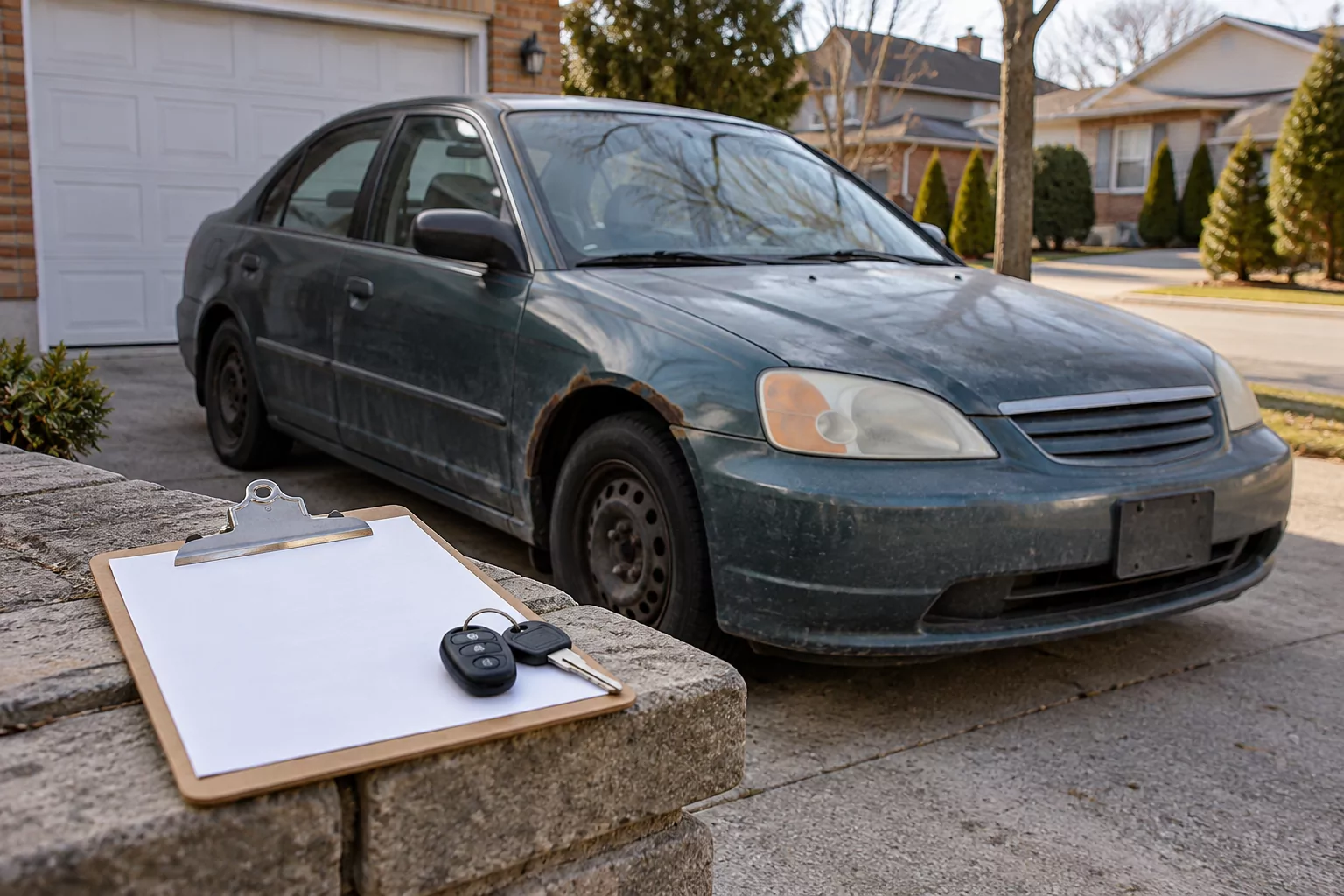
Brampton vehicle-sale checklist
Before selling a scrap or non-running car in Brampton, ask five things: what vehicle details affect the offer, whether pickup is included, when and how you will be paid, what ownership documents are needed, and who handles the vehicle after collection. Clear answers let you compare the whole transaction, not just an attractive headline price.
Quick answer
- Describe the car honestly, including missing parts and whether it rolls.
- Confirm the net offer, pickup terms, payment timing and access before accepting.
- Keep your plates and the plate portion of your Ontario permit; clarify the transfer paperwork for your transaction.
1. What details could change the offer?
Give every prospective buyer the same information: year, make, model, mileage, running condition, collision or mechanical damage, missing wheels or major components, and the vehicle’s location. Ask whether the offer is conditional on inspection and exactly which differences would change it. A quote based on a complete, rolling car may not apply to one with missing parts or seized wheels.
Ask for the amount you would actually receive. Do not treat a high initial figure as a guarantee. Keep a written record of the vehicle description and the terms you agree to, particularly if the buyer must review access or ownership before confirming collection.
2. Is towing included, and can the truck reach the car?
Ask whether collection is included in an accepted purchase or charged separately. Junk Car Bin includes towing when it agrees to buy the vehicle; it does not offer a stand-alone free tow through this article. Also ask what happens if the vehicle cannot roll, has flat tires, or is parked where loading equipment cannot safely reach it.
For a Brampton driveway, condominium garage, shared lot or repair-shop space, describe gate access, height clearance, available turning room and any permission needed to enter. A buyer can only confirm an appointment after reviewing the vehicle, ownership and pickup details. Do not assume same-day collection is available.
3. When and how will payment be made?
Confirm whether payment is due when the vehicle is collected and which method the buyer will use. Ask whether anything—inspection findings, missing components, access problems or outstanding finance—could delay or change payment. If a term is unclear, settle it before releasing the vehicle or keys.
Comparing offers means comparing the net amount, timing, documentation and pickup conditions together. A separate towing charge or an unconfirmed deduction can matter more than a small difference in the advertised offer.
4. Which Ontario ownership documents apply?
Check that the vehicle identification number (VIN) matches the vehicle portion of your Ontario permit and disclose any lien or ownership issue before agreeing to sell. Ontario’s used-vehicle sale guidance explains the bill of sale, completed transfer application on the vehicle portion of the permit, and the seller’s retention of licence plates and the plate portion. Its Used Vehicle Information Package guidance explains when a UVIP is required and lists exceptions. Ask the buyer or ServiceOntario which requirements apply to your specific sale; a quote alone is not a transfer.
Remove personal belongings before collection. Keep copies or a record of the agreed price, buyer, date and signed documents. Do not hand over plates with the vehicle.
5. Who takes the vehicle after pickup?
Ask whether the company buys and collects vehicles, operates a dismantling facility, or transfers accepted vehicles to another recycler or processor. Those are different roles. If downstream handling matters to you, ask the buyer what it can actually verify about the next step. Avoid assuming that a vehicle buyer has a public yard, sells reusable parts or performs material processing itself.
What should you do if an answer is vague?
Ask for clarification and compare another option. A buyer should be able to explain its own offer and pickup role without claiming guarantees about every vehicle or every downstream step. If you are still deciding whether to repair or sell, a repair estimate may help you compare the vehicle’s remaining usefulness with a purchase offer.
This checklist is about evaluating a transaction, not finding a nearby yard. For a vehicle-specific offer in Brampton, the commercial service page is the appropriate next step after you have gathered the car and access details.
Ready to request a Brampton vehicle offer?
Share the car’s condition, ownership status and exact pickup position. Junk Car Bin will review whether it can purchase and collect the vehicle, then confirm the offer and towing terms.