
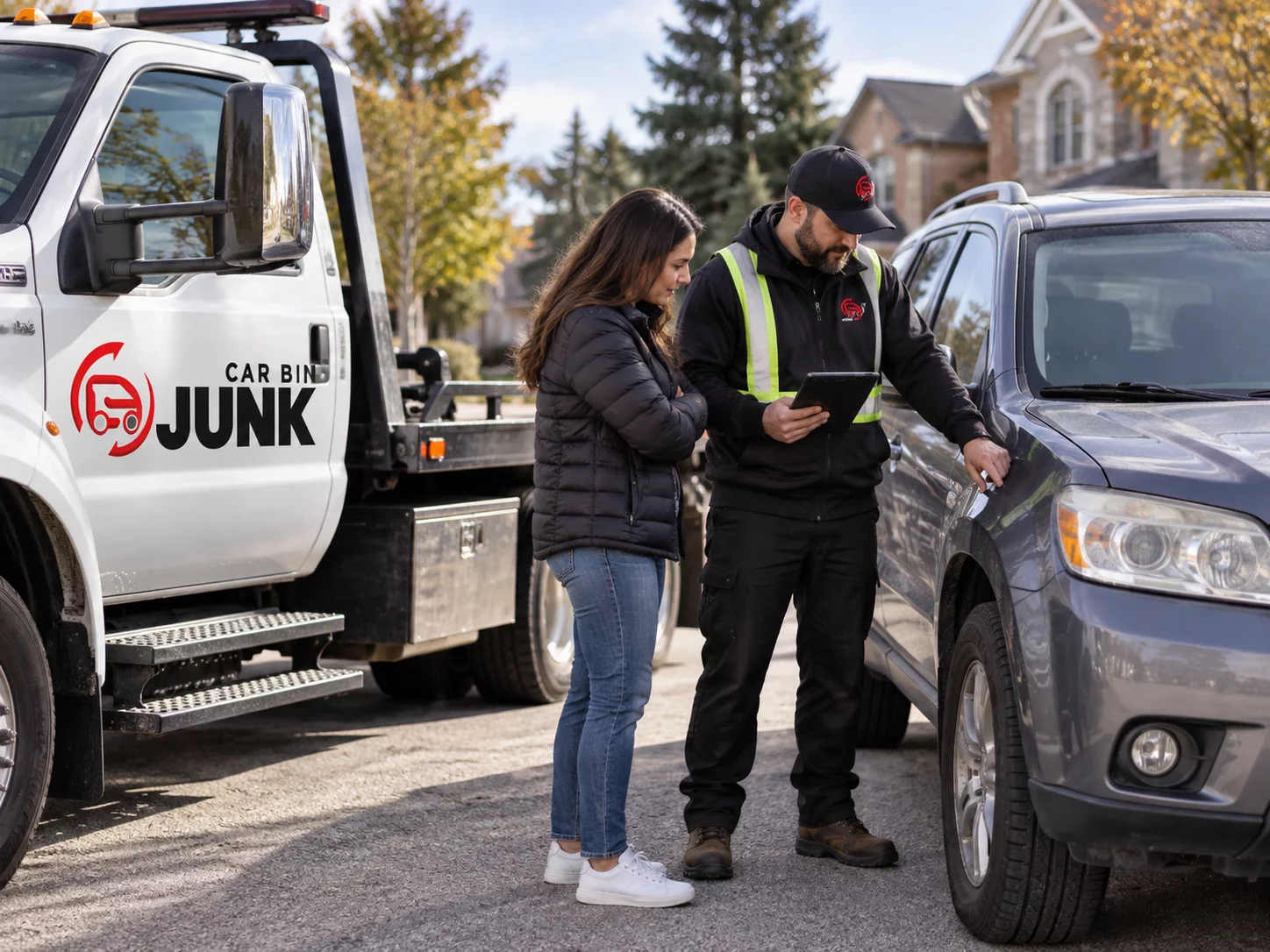
After vehicle collection
After pickup, a vehicle’s receiving operation may assess it for resale or repair, parts recovery, or material recycling. The route depends on condition, completeness and the receiving channel; not every vehicle follows the same sequence. Junk Car Bin’s role is to consider selected vehicles for purchase and coordinate accepted pickups, not to claim that it operates every downstream processing step.
Typical decision points
- Identity and condition are verified.
- The vehicle is assessed for reuse, parts recovery or recycling.
- Fluids and regulated components are managed where processing requires it.
- Usable components may be recovered and remaining materials separated.
- Records and material streams follow the receiving operation’s process.
1. Intake and vehicle identification
The receiving operation needs to identify the vehicle and compare it with the information supplied before pickup. The VIN, year, make, model, ownership records and condition help determine the next step. Major differences—such as removed parts, undeclared collision damage or missing ownership—can interrupt the process.
This is one reason accurate quote information matters. It supports both a fairer offer and a more appropriate collection plan.
2. Reuse, repair and parts assessment
A vehicle that is complete does not automatically go directly to material processing. Depending on the receiving channel, its overall condition may justify further evaluation for repair, resale or parts recovery. Functional components can sometimes extend the life of another vehicle and reduce demand for a newly manufactured replacement.
Parts recovery is selective. Safety, demand, damage, compatibility and the receiving operation’s testing standards all matter. An old component is not automatically suitable for resale simply because it can be removed.
3. Depollution and regulated materials
Vehicles can contain fuel, engine oil, coolant, brake fluid, refrigerant, a battery, tires and other materials that require controlled handling. Before a vehicle is processed for material recovery, the appropriate receiving operation typically addresses these items according to the vehicle’s condition and applicable requirements.
Owners should disclose leaks, fire exposure, flood contamination and damaged batteries before pickup. These conditions may require different handling and can affect safe loading.
4. Dismantling and material separation
Reusable components
Suitable engines, transmissions, body panels, electronics and smaller parts may be removed for evaluation and possible reuse.
Metals
Steel, aluminum, copper and other metals can enter separate recovery streams after depollution and dismantling.
Tires and batteries
These require their own handling routes rather than being treated as ordinary mixed material.
Residual material
Not every material is recoverable. Processing outcomes depend on technology, contamination and available downstream channels.
5. Why the destination matters
A vehicle buyer may coordinate pickup without operating a public scrap yard or recycling plant. Owners should distinguish the pickup service from the downstream facility. Ask what outcomes are possible and avoid assuming the company has a local yard, parts counter or processing line unless that is specifically verified.
Junk Car Bin’s auto recycling overview describes the service’s role and the possible downstream paths. It does not promise that each accepted vehicle is handled identically.
What owners can do before pickup
- Remove personal belongings and check the trunk, console and under-seat areas.
- Gather keys and the ownership information requested for the transfer.
- Disclose liens, missing parts, leaks and significant damage.
- Confirm the offer, towing terms, payment timing and appointment.
- Keep a record of the completed transaction.
Windsor-area owners considering this route can request a vehicle-specific review on the Windsor scrap car removal page. Towing is included when Junk Car Bin agrees to purchase the vehicle; acceptance and pickup availability are not guaranteed by a form submission.
Considering recycling for an unwanted vehicle?
Start with accurate condition, ownership and pickup information. The vehicle can then be assessed for an appropriate offer and collection plan.