
Old-vehicle decision guide
The best option for an old car depends on its safety, repair needs, market value, ownership and the owner’s priorities. Repair may preserve useful transportation; a private sale may suit a roadworthy vehicle; donation may support a chosen organization; and a vehicle-purchase or recycling route may be practical when repairs no longer fit the plan.
Compare these factors first
- Total repair cost and the vehicle’s expected remaining use
- Time and effort required for advertising or appointments
- Roadworthiness, documentation and lien status
- Whether the vehicle can be moved safely
- Net value after towing, fees or required repairs
Option 1: repair and keep the vehicle
Repair can make sense when the vehicle remains structurally sound, the diagnosis is clear and the total work fits the owner’s budget and expected use. Consider upcoming maintenance as well as the immediate fault. Tires, brakes, corrosion, warning lights and deferred repairs can change the complete cost.
Ask a qualified repair professional for a written estimate and whether additional problems are likely to appear once work begins. Compare the repair cost with the price and uncertainty of replacing the vehicle, not only with its current resale value.
Option 2: sell privately
A private sale may return more for a running, presentable vehicle, but it requires accurate advertising, inquiries, viewings, negotiation and a documented transfer. Disclose known defects and do not present an unsafe vehicle as road-ready.
For a non-running or heavily damaged vehicle, the pool of private buyers is smaller. Transportation and inspection questions can consume more time than the possible price difference justifies.
Option 3: trade in
A dealer trade-in can be convenient when purchasing another vehicle. The trade value is only one part of the transaction, so compare the complete purchase terms rather than focusing on one number. Some dealers may not want severely damaged, incomplete or non-running vehicles.
Option 4: donate
Donation can suit an owner who wants to support a particular organization and does not need immediate sale proceeds. Confirm the charity or program, who issues any tax receipt, how value is determined, whether towing is included and what happens if the vehicle is not accepted.
Use the organization’s official contact details and avoid assuming every charity accepts every vehicle or provides the same tax outcome.
Option 5: request a vehicle-purchase and pickup offer
This route can be practical when the owner values a clear offer and coordinated removal more than the effort of a private sale. The offer should be based on the actual vehicle, including condition, completeness, ownership and access. Towing terms, payment timing and any conditions should be understood before pickup.
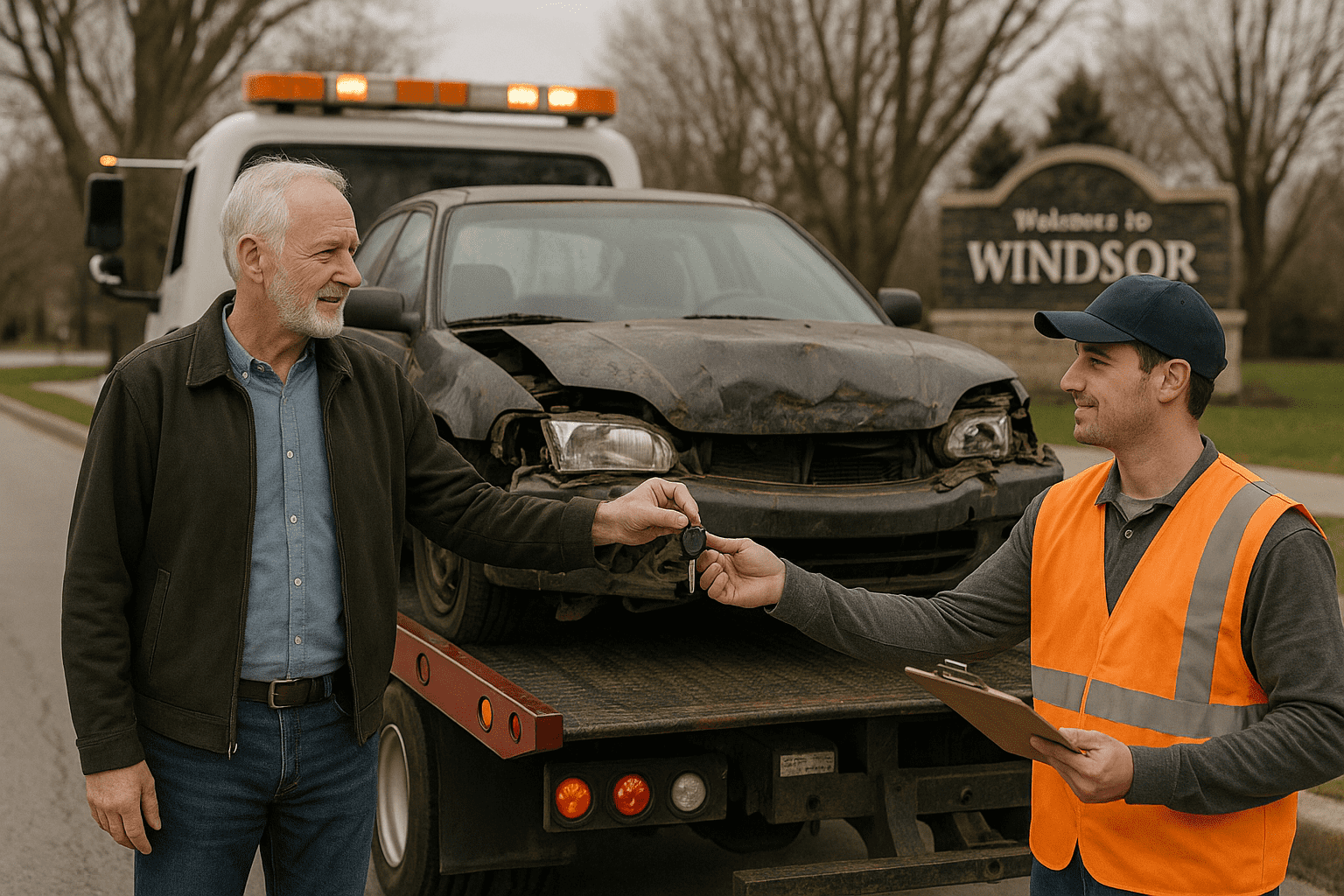
Junk Car Bin considers selected running, damaged and non-running vehicles. It includes towing when it agrees to purchase a vehicle; it does not guarantee purchase, price or same-day availability from a form submission.
| Option | Often suits | Questions to resolve |
|---|---|---|
| Repair | A sound vehicle with manageable work | Total cost, safety and expected remaining use |
| Private sale | A marketable vehicle and owner with time | Disclosure, viewings, payment and transfer |
| Trade-in | An owner already replacing the vehicle | Complete purchase terms and eligibility |
| Donate | An owner supporting a chosen organization | Acceptance, towing and receipt process |
| Vehicle purchaser | An unwanted vehicle needing coordinated pickup | Offer, towing, documents, access and timing |
Windsor pickup factors
Explain whether the vehicle is in a driveway, garage, underground level, repair shop, business lot or another authorized space. Report height limits, ramps, gates, soft ground, locked steering, flat tires and missing wheels. Collection can only be planned after the access route is understood.
Prepare the year, make, model, approximate mileage, condition, keys and ownership information. If the vehicle is financed, jointly owned or part of an estate, resolve transfer authority before scheduling.
How to make the final choice
- Write down the outcome that matters most: continued use, time, convenience, return or supporting a charity.
- Get the repair estimate or offer in writing where practical.
- Compare net outcomes after fees, towing, repair work and time.
- Choose only after the transfer and pickup terms are clear.
If a purchase-and-pickup option fits your priorities, use the Windsor vehicle quote page. For more detail about the downstream process, read what may happen after vehicle collection.
Compare an offer for your Windsor vehicle
Share accurate vehicle and pickup details, review the terms, and compare the offer with your other options before deciding.